One Jackson, One Rulebook: What a Single $20 Bill Taught Me About Playing Fortune Tiger Right
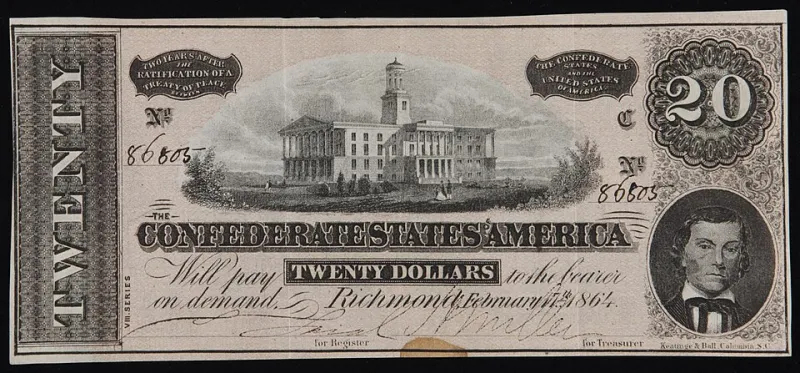
Photo: Confederate States of America (unknown engraver), Public domain, via Wikimedia Commons
Twenty dollars. That's it. That was the entire bankroll for this experiment, and honestly, it felt almost too small to bother with.
Most of us treat a slot session like a road trip — plenty of gas, vague directions, and a hopeful attitude about where we'll end up. The $20 Challenge flips that on its head. The rules were simple enough to fit on a napkin:
- Start with exactly $20 in Fortune Tiger
- Stop the moment you either double up ($40) or hit zero
- No deposits, no top-ups, no exceptions
- No chasing a loss, no pressing a hot streak past the finish line
Here's what happened, and what it taught me about how most of us play the game wrong.
The First Ten Minutes Feel Strange — On Purpose
The weirdest part of a capped session is the opening. When your bankroll is a single bill instead of a cushion, every spin carries weight. Bet sizing stops being an afterthought. I found myself dropping down to smaller stakes almost instinctively, because suddenly there was a real number — a real, finite number — attached to every click.
That's the first lesson the $20 Challenge hands you for free: when the money is genuinely limited, discipline stops being a virtue you have to summon and becomes something the structure does for you.
The Math of a Hard Stop
Let's be honest about what Fortune Tiger is. Like every slot, it runs on randomness — there's no trick that bends the outcome toward you. What you can control is how long you play and how much exposure you take.
A capped session puts a ceiling on both. Doubling your money and walking is a win in the truest sense: you beat the clock, you beat the temptation, and you leave with the session's maximum possible result. Busting through $20 is the alternative, and it costs exactly twenty bucks — the price of a decent takeout order and a movie rental.
Either way, the damage is bounded. That's the quiet genius of the format. Compare it to the classic marathon session, where a $60 night quietly becomes a $150 night because there was never a line drawn in the sand.
Constraints Are Weirdly Fun
Here's the part nobody expects: the small bankroll made the game more entertaining, not less.
Psychologists call it the constraint effect — when resources are limited, attention sharpens and enjoyment per moment goes up. Every near-miss mattered more. Every small payout got a genuine fist pump. There was no numb scrolling-through-spins, no autopilot. Just twenty dollars' worth of fully experienced gameplay.
Think about how you watch the final two minutes of a close NBA game versus the third quarter of a blowout. Same sport, wildly different engagement. The $20 Challenge turns every spin into clutch time.
What to Do When It Ends
The stop rule is where most players' good intentions go to die. Two tips that got me through it:
- Decide the exit before you enter. Once $40 hits the balance, the session is over. Not "one more spin." Done.
- Log the result. Write down the outcome — win or bust. Over time, those entries tell you more about your habits than any hunch ever will.
When I doubled up on this particular run, the walk-away felt almost physical — the itch to keep going was real. But that itch is exactly the thing this experiment is designed to expose. Sitting with it, instead of feeding it, might be the most valuable skill a Fortune Tiger player can build.
The Takeaway
You don't have to adopt a $20 cap forever. But run the experiment once and you'll learn things about your own play that a hundred casual sessions never reveal: how you size bets under pressure, how you react to a losing stretch, and whether you can actually honor a stop-loss when it counts.
Small bill. Big lesson. The tiger doesn't care how much you bring to the table — but your future self absolutely will.